
Forty years on, and "My Lai" is synonymous with "massacre"
Published 15th March 2008
All credits: BBC News
Forty years on, and “My Lai” is synonymous with “massacre”. The killing of Iraqi civilians at Haditha has often been referred to as a modern-day My Lai. The name is shorthand for slaughter of the defenceless, the benchmark of American wartime atrocity.
The murders of 504 men, women, children and babies happened in a northerly province of South Vietnam on 16 March 1968. It proved to be a turning point for public opinion about the Vietnam War. Yet, most of what we know about the event comes from a single, widely publicised court martial in 1970-71. A young Lieutenant - William Calley - in Charlie Company was tried and convicted of murdering 22 “oriental human beings” in My Lai on that sunny morning in 1968.
Forgotten tapes
Media attention on Lt Calley’s trial was extensive and the glare of publicity so bright it hid the wider, more awful truth. Before that trial got under way, the United States army had, behind closed doors, completed an investigation of its own into the events at My Lai, and specifically into the possibility that those in authority had deliberately covered up a massacre.
Convened on 1st December 1969 in the basement of the Pentagon, The Department of the Army Review of the Preliminary Investigations into The My Lai Incident, known in abbreviated form as The Peers Inquiry, was chaired by Lt Gen William ‘Ray’ Peers. In just 14 weeks, the Peers Inquiry conducted a comprehensive and wide-ranging investigation into the events of 16 March.
Read full article > The My Lai Tapes (BBC)
Part One >
Part Two >
Other reports:
1968: The My Lai Tapes
Saturday 15th March 2008 (Radio 4 FM)
Survivors reflect 40 years after My Lai
By Ben Stocking Associated Press Writer
16th March 2008
'Blood and fire' of My Lai remembered 30 years later
CNN News
16th March 1998
Wednesday, April 30, 2008
The My Lai Sager


Wednesday, February 13, 2008
News Digest (World)
 Afghanistan's refugee crisis 'ignored'
13th February 2008
A growing humanitarian crisis in Afghanistan is being overlooked as an unknown number of people are fleeing their homes, caught between security forces and the Taliban, Red Cross officials have told the Guardian.
They say they have less access now to displaced people than at any time over the past 27 years. "The conflict has not only intensified but it has also spread over the last few years. Prolonged human suffering is causing real concern in ever larger areas," said Reto Stocker, head of the International Committee of the Red Cross delegation in Kabul. "There is little capacity to address it. We've never had so little access."
Read full article >
............................................. Australia's new Prime Minister Kevin Rudd has delivered a historic apology to the country's Aboriginal community
12th February 2008
In the first act of parliament today, he apologised to the Stolen Generations - young Aboriginal children taken from their parents in a policy of assimilation which lasted from the 19th century to the late 1960s. One of those, Ruby Hunter, was eight when she was taken from her parents.
Read full article >
.............................................
What can an apology achieve for Aborigines?
12th February 2008
Prime Minister Kevin Rudd said sorry for the past mistreatment of indigenous people by successive parliaments and governments. In particular, he apologised for the long-running policy which saw the forcible removal of thousands of aboriginal children from their families; a practice that persisted in Australia until the 1970s.
Australians hope the apology will help repair the breach between the country's white and black citizens. How significant do you think is this move by Mr Rudd? Can it bring reconciliation to the Australian society? Do you think the action has come too late? What can other countries learn from Australia? Are you an Aborigine or a white Australian? .
Read full article & comment >
.............................................
Friday, January 11, 2008
On its Sixth Anniversary, Calls Resound Worldwide for Closure of Guantanamo Bay Prison

Source: Democracy Now
Over 800 men and boys, so-called “enemy combatants,” have been held without charge at Guantanamo since January 11, 2002.
We speak to Michael Ratner, president of the Center for Constitutional Rights. We’re also joined by London-based writer Mogib Hassan. His cousin, Fawaz Mahdi, was jailed in Guantanamo for over five years. He was released in June but has been suffering severe psychological problems and has tried committing suicide several times.
See Video Clip >
Listen to Audio Clip >
MP3 File Download >
Recent News Headline:
21st December 2007
Guantanamo Bay detainee Omar Deghayes has spent his first night of freedom at home after more than four years at the US detention camp.
See Video/Audio Footage >
Thursday, January 03, 2008
24,000 civilian Iraqi deaths in 2007

Violence in
The Iraq Body Count (IBC) whose figures are tallied from media reports, morgues, hospitals, non-governmental groups and other sources, said in a report released Tuesday that there were between 22,586 and 24,159 violent civilian deaths in
"Perhaps the most accurate description of the security situation for Iraqi civilians in the past year is that it was less bad than if the worst of the late 2006 levels had been sustained throughout 2007," the group said in a statement.
The IBC lamented security that "remains at an abysmally low level" in much of the country.
"For some 24,000 Iraqi civilians, and their families and friends, the year was one of devastating and irreparable tragedy," the IBC said.
The body count project was founded in January 2003 by volunteers from
The group said that as of
Tuesday, July 10, 2007
More than 50 dead as troops storm Red Mosque

Fears mounted of large-scale casualties at
The official death toll stood at 50 militants and eight soldiers but in a phone call to a local television station the mosque's chief cleric, Abdul Rashid Ghazi, said there were "dead bodies everywhere".
Special forces soldiers attacked from three directions just before dawn in a bid to end the seven-day siege of the radical mosque. But by afternoon they were still battling for control of the Jamia Hafsa madrasa, or religious school, which military officials described as a sprawling 75-room complex.
Thursday, July 05, 2007
Shops emptied as panic grips Zimbabwe

Panic buying swept through the streets of Zimbabwe yesterday, as stores ran out of basic goods and shopkeepers complained that they were selling goods at a loss after the government ordered prices to be halved in a last-ditch effort to tackle hyper-inflation.
Shoppers desperate to restock in a country ravaged by shortages cleared out supermarkets in the capital, Harare, and Bulawayo, where shelves were bare of essential items such as maize meal, cooking oil, sugar, milk, soap, bread, chicken, beef and other items.
 "I am selling goods at less than what I paid for them. I am selling bread at less than what it costs to bake it," a distraught Harare shopowner said, pleading for anonymity so as to avoid government retribution. "I am following the government's orders. Army soldiers came here this morning to check prices. Mugabe has threatened to seize any business that does not do what he says. I don't know how long this can continue."
Tuesday, July 03, 2007
News Digest (July 07)
 Woman died after one police shot
A woman shot by a police marksman after a stand-off in a Kent market town died from a single gunshot wound to the chest, an inquest has been told. Ann Sanderson, 37, was shot after police received reports of a woman armed with a gun in Sevenoaks in the early hours of Monday.
 DNA of under-10s on government database
The DNA fingerprints of more than 100 children aged under 10 are stored on a government database despite their being younger than the age of criminal responsibility, it emerged today.
 Prison suicides up to two a week as jail numbers soar
 Suicides in prisons have risen to two a week, with 43 so far this year as overcrowding in England and Wales bites more deeply, the chief inspector of prisons told MP's last night.
 Family sues MoD over Iraq death
The family of an Iraqi man who was beaten to death while in British military custody are suing the Ministry of Defence. Lawyers for the children and father of Baha Mousa, say they are looking for "hundreds of thousands of pounds" in damages.
 Ministers lose manslaughter vote
The government has been defeated in the Lords over plans to exclude prisons from its Corporate Manslaughter Bill. Peers voted by a majority of 91 to reinstate their amendment saying the offence of corporate manslaughter must apply to people who die in custody.
Monday, April 30, 2007
Q&A: Sudan's Darfur conflict

The African Union (AU) peacekeeping force in Darfur is struggling to halt widespread abuses and violence, but Sudan is rejecting plans for it to hand over to a larger, stronger UN mission, raising the prospect of wider US sanctions.
More than two million people are living in camps after fleeing almost four years of fighting in the region and they would be even more vulnerable without any peacekeepers.
Other Reports:
Peace deal rekindles Dafur conflict - Read more >>
Scores killed in new attacks on
The humanitarian situation in
Friday, January 12, 2007
Secret Massacre
Britains blood-soaked secret massacre
The brutal suppression of the Mau Mau uprising in Kenya during the 1950s is little known by comparison, not least because Britain has sought to cover-up the atrocities by destroying documents.
Despite the efforts to erase possibly the most bloody chapter of colonial history, evidence has been painstakingly pieced together and may be aired in the High Court next month.
Hundreds of thousands were killed in a place the high-living Eton and Oxbridge aristocracy liked to call “White Man’s Country.”
Concentration camps were used to imprison men of the Kikuyu tribe who were seeking to reclaim stolen land, such as the Happy Valley , immortalised in Hollywood movie White Mischief starring Greta Scacchi.
bonfire
Women and children were effectively imprisoned in villages surrounded by armed guards. Many people who were not killed by the bullet instead perished of hunger or disease.
Bonfires of documentation were lit across the old British East Africa Protectorate on the eve of independence in 1963, and some surviving files are still stamped “secret” fifty years later.
But for people like Mucheke Kioru, now 75 years old, his memories of what happened remain as vivid today as it was then. For him, and many other Kenyans, the pain still burns as fiercely as those bonfires, and the British governments’ refusal to say “sorry” merely rubs salt into wounds that, historically speaking, are still fresh.
Saturday, October 14, 2006
News Digest - 14th October 2006
 What happens when police kill?
4WardEver Comment:
This strikes us as yet another attempt (and possibly one we should be worried about) to excuse armed officers of any wrongdoing even before they have done wrong – now there’s a contradiction in terms if ever we heard one!?
Is this just the tip of the iceberg? When increasing pressure and public exposure is being bought to bear on the police for all deaths in custody, what next? Pre-post traumatic syndrome!! Well worth a watch….. Make up your own mind.
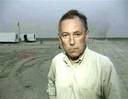
US soldiers killed British TV reporter
 Breakthrough in Brit execution case
12th October 2006
A European Parliament member has won EU backing in a bid to save a British citizen from execution. Mirza Tahir Hussain faces execution in
Tribute to ‘
10th October 2006
On this day when activists all over the world try to get people to think about this barbaric system I want to share a video one of my best friends made in memory of her husband, executed just a few short months ago. "
I hope if nothing else it makes you stop for a second, and think about doing something, anything, to stop more families going through what Noora has to go through now. I know it is so easy to feel this is something so abstract it doesn't have any bearing on life in a country without a death penalty, but killing anyone and calling it justice really kills a little of the humanity in all of us.
Sunday, August 13, 2006
Lebanon exposes wider fault lines


One of the reasons that the bitter fighting between Israel and Hezbollah has been so difficult to halt is that it is a symptom of much deeper fault-lines in the region.
Many analysts see it as part of a wider conflict that pits the United States against Iran and Syria. But the crisis has also highlighted some fundamental shifts within the Arab world.
Washington is Israel's close ally. Iran is one of Hezbollah's major backers. Inevitably then, this crisis serves to accentuate tensions between Washington and Tehran. Locked in a stand-off over Iran's nuclear programme, the summer months were expected to be dominated by a rising crescendo of pressure on Tehran to constrain its nuclear ambitions or, possibly, to face some serious international pressure.
 Instead, international diplomacy has been forced to confront the fighting across the Israeli-Lebanese border. The controversy surrounding Iran's nuclear programme, if not forgotten, has certainly been pushed to the sidelines.
A great deal of ink has already been used trying to ascertain why Hezbollah actually mounted the raid into Israel where it seized the two Israeli soldiers.
Was this, some argue, an operation ordered by Tehran precisely to divert attention from the nuclear controversy? There is no hard evidence either way. But the relationship between the Iranians and Hezbollah is close and long-standing.
Sunday, June 18, 2006
Demonstrators Demand Apology

One of the brothers involved in the Forest Gate terror raid joined a demonstration demanding a full apology from the police.
Brothers Mohammed Abdul Kahar, 23, and Abul Koyair, 20, spent several days in custody following the June 2 raid during which Mr Kahar was shot. Both men were later released without charge. Mr Koyair addressed the rally following the march and told hundreds of supporters: "I just want to say thank you all for supporting our family in this very hard time."
He added: "(We) don't want this to happen to other people in this community, Muslim (or) non-Muslim." His brother Jalal read out a statement from Mohammed Abdul Kahar who was shot. Mr Kahar apologised for not attending the demonstration and said he was still experiencing pain from his wound.
Organisers of the march issued a statement of seven points they want addressed.
Muddassar Ahmad, spokesman for the organisers, said: "We clearly, clearly want an apology - unqualified. If you're going to apologise, apologise properly, don't apologise for 'hurt'."
On Tuesday the men gave a dramatic and emotional account of the raid, following this Assistant Commissioner Andy Hayman issued a statement in which he apologised for the "hurt" the police may have caused. Mr Ahmad added: "What's needed now is confidence-building measures - the community is feeling very isolated".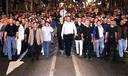
The statement, issued by the organisers comprising community groups, Muslim organisations and some political parties, asks for a "full and unqualified apology" from the Metropolitan Police to those directly involved in the raid. They also asked for the same apology from the Prime Minister Tony Blair.
Many of those protesting carried banners which said 'Police brutality never makes us feel safer' and others chanted the words "we will not live in fear". Also joining the marchers were family members of Jean Charles de Menezes, the Brazilian shot dead on July 22 last year after being mistaken for a suicide bomber the day after a series of botched attacks on the underground system.
Mr Koyair wore a Brazilian football shirt in support of the de Menezes family.
Other stories:
Jun 9: Muslims gather for terror raid protest
South Africa marks Uprising
all credits - USA Today
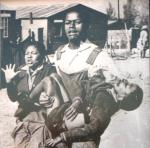
The marchers paused at 9 a.m. for a moment of silence to remember Hector Pieterson, a 13-year-old killed by police who shot at the unarmed demonstrators. His death has come to symbolize the sacrifices of young people in the fight for South Africa's democracy and freedom.
More than 500 young people were estimated killed in the Soweto Uprising and its bloody aftermath. Thousands of others disappeared into detention or fled the country to join the guerrilla fight, forever changing the face of the anti-apartheid struggle.
The uprising started as a student protest against being taught in Afrikaans, the language of white oppressors, which few among the black majority could understand. Police responded with brutal force, and news of the killings and the riots they unleashed across the country awakened the world to the government's violence.
"Hector would be 42 now - he died for the nation, and today he is part of history."
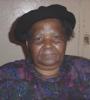 Dorothy Molefi lost her son 30 years ago. He was Hector Peterson, shot by a police bullet on 16 June 1976, becoming the first victim of the student uprising against apartheid. On Friday morning, Mrs Molefi joined President Thabo Mbeki and other officials in laying wreaths at the monument in Orlando West, Soweto, to her son and others who died in the uprising.
"I'm so glad about what's happening today, 30 years later," she told the BBC News website. She reflected on the changes that have come about since the start of democracy in South Africa: "Single mothers are given houses - our children are mixed with whites in the schools."
'Celebrate'
For the younger people who gathered around the monument, part of the excitement of the moment was having a public holiday - Youth Day, as 16 June now is - all of their own. Nonkululeku Mnikati, 23, said she was there "to celebrate freedom - to celebrate being recognised as the youth of South Africa."
On the generation of 1976 she said: "We look up to them, what they did was great. But sometimes it's like looking at a movie, it's hard to believe what happened was real. "So it's good to see Hector Peterson's mother here, because that helps us to know it was real."
The day's events had begun in a frosty dawn several kilometres away, outside the Morris Isaacson High School, from where the first group of teenage demonstrators had set out 30 years ago, led by a student called Tsietsi Mashinini.
After the march, Tsietsi went into hiding and later died in mysterious circumstances in Guinea. His mother, Nomkitha, was there in a wheelchair to help unveil a monument in the middle of a newly created memorial park opposite the school.
"We thought it would just be a few months of struggle - unfortunately it didn't work out like that," she reflected.
Peanuts
At the monument, another veteran of '76 who had joined the ANC's liberation army explained its significance to a group of younger people. "I wanted to be a doctor, but I ended up carrying an AK-47 and now I work for the police. The struggle changed me." Gilo Maguma, 40, was also involved in the protests, and is now unemployed.
"We are not liberated yet - we are still confined to 13% of the country," he said in reference to the fact that white people still own most of South Africa's land. Black people earn peanuts."
Read the full article >>
........................................................................
Other Articles:
Student heroes separated by time
(16th June 2006)
In Retrospect: A Look at the 1976 Soweto Uprising
(1st January 2004)
Hector: the famous child whose face is unknown
(14th June 2002)


